I’m excited to be leading the Roundtable Discussion at OpenChain x OSPOlogy Prague on October 6 on the topic of taking a Strategic Approach to Improving your OSPO using CHAOSS.
Metrics can provide deep insights into our open source initiatives, but they can also be overwhelming and require interpretation. Interpreting metrics and understanding what they mean is only useful if you drive appropriate actions to make decisions and improvements based on those metrics. In this roundtable, we’ll use a strategy first approach to discuss how to use metrics, tools, and practitioner guides from CHAOSS to improve the work within your OSPO whether you want to improve OSS projects themselves, assess their viability / risk for your organization, or demonstrate the value and impact of your OSPO.
Since this will be facilitated as a roundtable discussion, here are some links that participants (and anyone else) may find helpful.
Regular readers of this blog know that helping organizations demonstrate the value of their open source efforts is something I’ve been focused on for a while, and it’s one of the consulting services that I offer. I recently summarized some of my thoughts on this topic into a single blog post where you can learn more: A Strategic Approach to Demonstrating the Value of OSS Efforts.
This is why I was so delighted to review and provide feedback on a recent Linux Foundation report on this topic along with writing a blog post summarizing the report. The blog post originally appeared on the Linux Foundation blog, but I wanted to also re-post it here for reference.
Open Source Program Offices (OSPOs) play important roles within organizations, but that role isn’t always appreciated or understood within the executive team or by other stakeholders. In the current financial climate, some OSPOs have been the targets of cutbacks and layoffs, so this is a particularly important time for OSPOs to be clear about the value that they provide to their organization. Leaders within every organization are responsible for making sure that their organization focuses on the activities that have the biggest impact on helping that organization achieve their goals. As a result, OSPOs need to be able to demonstrate that the value of their work can have a larger impact on the organization than the other initiatives that are also competing for resources. As the CHAOSS OSPO Metrics Working Group co-chair and CHAOSS board member, the topic of measuring OSPO value is one that I have cared deeply about for years, and I recently gave a talk on this topic at the Open Source Summit North America in May. This is why I was so excited to read Ibrahim Haddad’s latest report, Measuring OSPO Value: A Framework for ROI, Resilience, Risk Foresight, and Strategic Influence, and share a few highlights from the report in this blog post.
It’s easy to say that OSPOs should be better at measuring value, but it’s not quite that straightforward. OSPO value has always been difficult to measure because much of the work is preventative, the effects are distributed throughout the organization, the impact is spread across multiple time horizons, and the work is cross-functional. However, it’s become increasingly urgent with the ubiquity of open source software impacting revenue-critical systems, security and supply chain expectations increasing, regulations having a bigger impact on open source, and AI-generated code adding complexity.
There is no one way to measure OSPO value, so the report uses a framework with 4 interrelated dimensions that can help OSPOs reason about value from multiple perspectives that can be applied through the lens of their unique organizational goals.
ROI and cost avoidance. In my experience, when executive leadership and finance are questioning an OSPO’s value, they usually start by asking questions about ROI, but this narrow framing doesn’t tend to be particularly useful in my opinion. OSPOs don’t typically generate direct revenue, but they can have an impact on cost avoidance, including reduced duplication, improved efficiency, and lower maintenance costs that can be used for financial justification.
Resilience. Engineering and security leadership on the other hand want to better understand how the OSPO is helping the organization avoid disruption through preparation related to visibility and management of dependencies, SBOM coverage, licensing or provenance concerns, and readiness around engineering decisions. When this is done well, everything proceeds smoothly and crises are avoided, but this is why measuring resilience proactively is an important part of measuring OSPO value.
Risk foresight. While resilience is about preparedness, risk foresight is about detecting potential issues early enough to mitigate the impact and avoid incidents. This includes detecting potential license issues, governance problems, supply chain concerns, security vulnerabilities, and regulatory / policy changes. This value can be measured and communicated by documenting near-misses and creating a narrative around how the OSPO took action to prevent the issues. The CHAOSS Assessing Viability Practitioner Guide provides additional insight into this dimension.
Strategic influence. This dimension measures an OSPO’s long-term value, including how the OSPO strategically invests in the open source ecosystem with presence, engagement and influence in technologies, standards, and organizations that are critical for the organization now and in the future. We also covered some of this in the CHAOSS Demonstrating Organizational Value Practitioner Guide.
The report also highlighted a few principles for building a measurement system across these 4 dimensions, including measuring outcomes (not activities), focusing on a smaller number of indicators, using both quantitative and narrative approaches, explicitly documenting assumptions, distinguishing between enabled value and owned value, avoiding metrics that punish disclosure, designing for maturity, stating framework limits, and having metric continuity. Ultimately, all of this work to measure and demonstrate value needs to be communicated to executives and other stakeholders in a way that they can understand the importance of the OSPO. Ibrahim’s report has more details on tailoring communications to specific audiences, using scorecards, evolving your approach over time, and a practical roadmap for implementation.
If you work in an OSPO or do open source work within an organization, now is the perfect time to rethink how you measure and demonstrate the value of this work, and this report is a great way to get started or get you thinking about how you can improve your existing approach to measuring OSPO value.
I hope you enjoyed reading this blog post! If you want feedback or help with your open source strategy and how to demonstrate value for your organization, I’m available for consulting engagements.
I think we’ve all been on teams where everyone is working, but no one is thinking about whether it’s the “right” work. It can be too easy to go on autopilot and keep doing the same things without thinking about whether / how those activities fit within the goals of the overall organization. I’ve built my career around taking a strategic approach to the work that my team is doing by making sure that our efforts support the overall strategies of the organization. Most recently, I did this as Director of Open Source Community Strategy at VMware and before that as Pivotal’s Open Source Strategy Lead. I’ve given loads of conference talks and written many blog posts with this strategic approach as the underlying theme. Last week, I read a LinkedIn post and blog post from David Hirsch that got me thinking more about this, and those ideas just kept rolling around in my head until I decided that I should blog about how OSPOs (Open Source Program Offices) can take a more strategic approach.
One piece of David’s post talked about how OSPOs can play a critical role in digital sovereignty for European companies by helping them make better technology choices at a strategic level. I believe that this is absolutely critical for European companies, but thinking strategically is also important for all OSPOs, which is the focus of this post.
Being proactive and thinking strategically about how you are helping your organization meet their goals and objectives is something that can help your OSPO stand out as an important part of the business. This is especially true for new OSPOs, since it can help you justify continuing and growing your open source efforts, but it’s also something that established OSPOs should revisit regularly to make sure that you are still doing work that is valued within your organization. OSPOs often struggle to demonstrate the value of their work in a way that resonates with the people in leadership positions within their organization. Creating and regularly updating an open source strategy can help OSPOs frame their discussions with leadership to demonstrate the value of their open source efforts in ways that resonate with leadership and show how the open source works fits into the strategy of the organization as a whole. Once you have an OSPO strategy that aligns with the strategy of your organization, then you can figure out what you need to measure to show whether you are achieving your goals.
Another area that can benefit from an OSPO’s more strategic approach is in assessing risks and viability of the open source projects that your organization is consuming. Many organizations don’t have a rigorous or strategic process for selecting the most viable dependencies. Often product teams, or even individual software developers, select open source projects because they fill a particular technical need without any assessment of the viability of the project or the risks they might be taking by using it. Is the project controlled by a single company or a foundation? Who contributes to the project? Is the project at the risk of a rug pull or similar disruptions? Assessing the viability of open source projects, especially ones that have the potential to impact your business, is a good first step toward managing risk and reducing the chances of potential business disruptions. But it’s also important to look beyond just assessing the viability of individual projects and to look at viability and risk with a more holistic approach that includes assessing the risks associated with cloud infrastructure, data storage and access, use of AI models, vendor lock-in, and more.
Another critical piece of an OSPO’s strategy is around contribution to open source projects. By having employees actively participating and contributing to the projects that are most strategic for your organization, they can influence project direction, fix bugs, add features, otherwise improve the health and sustainability of the critical projects for your organization. I also like to think of contribution as a way to anticipate and mitigate risks as part of thinking about viability. When assessing viability, you can include whether contributing to a project might help improve viability. Organizations have the power and resources to make real improvements within open source projects, and corporate involvement and contribution can positively impact the sustainability of our projects.
I only scratched the surface of a few topics here. It isn’t possible to cover every part of an OSPO’s strategy in one blog post, so there are certainly other areas, like business impacts, licensing and compliance, governance, policies, and more. What’s important is to think about what your organization is trying to achieve and how your OSPO can play a strategic role in helping your organization be successful. If you want feedback or help with your open source strategy, I’m available for consulting engagements.
The topic of viability and risk is one that’s near and dear to my heart, and is something that I’ve been talking and speaking about for the past 5 years going back to when I was at VMware where it was an important consideration for our Open Source Program Office.
Open source software is found in almost every codebase, but some open source projects are more viable than others over the long term. Many companies don’t have a rigorous process for selecting the most viable dependencies. Often product teams, or even individual software developers, select open source projects because they fill a particular technical need without any assessment of the viability of the project or the risks they might be taking by using it. Assessing the viability of open source projects, especially ones that have the potential to impact your business, is a good first step toward managing risk and reducing the chances of potential business disruptions.
Here’s a short quote from the guide:
“Most business decisions boil down to an assessment of risk and making tradeoffs. Organizations should be thinking strategically about project risks in light of how they are using the projects. If it’s a critical part of a technology stack, it should be as low of a risk as possible. On the other hand, if an open source project is used as a small part of some non-critical infrastructure, an organization can accept more risk. Assessing viability and thinking about it from the perspective of risk and which risks to accept is an important first step, but it’s also important to think about which risks can be mitigated to improve viability. The best way to mitigate many of these risks is by paying employees to contribute to the projects that are most important to your organization. This provides an opportunity to improve viability and sustainability, but it also provides insight into where the project is heading and how things are going, so that if something changes in the project to further increase risk, it might be easier to anticipate those changes.”
This guide provides advice for assessing viability across four categories: compliance and security, governance, community, and strategy. Depending on your use case, you may find different opportunities to use this viability assessment framework and how you use it will vary based on your organization’s assumption of risk. I hope you enjoy this guide and the others in the CHAOSS Practitioner Guide series! If you want feedback or help with your open source strategy, I’m available for consulting engagements.
I’ve been involved with open source project metrics for a very long time, and people often ask me which metrics they should use, but this isn’t really a question that I can answer. What you measure and how you interpret those metrics depend on your goals and what your organization is trying to accomplish. For this blog post, I’m using “organization” loosely. It could mean your company, university, or non-profit, but it might also mean aligning with funding organizations if your OSPO or other open source efforts were funded by another organization.
“one of the best places to start isn’t actually with the metrics, but by spending some time understanding the overall goals for the project. If the project is primarily driven by one organization or owned by an organization, you should also consider the goals for that organization. By thinking strategically about the overall goals, you’ll be in a better place to decide what you need to measure to determine whether the project is achieving its goals. Open source projects generate a tsunami of data that can be overwhelming, but by focusing on the goals, you can develop a metrics strategy that helps you focus on the metrics that matter most for a particular project.”
It can help to ask yourself, “what is important for my organization or the project?” This often means starting with your team’s open source strategy and aligning it with your organization’s goals. The most important part of putting together strategies and plans for your open source efforts is aligning them with the overall goals for your organization. By taking some time and effort to make sure you support the overall strategy for your organization, then it will be much easier to justify continuing these efforts during the next planning or funding cycle. This will also help you make the case to senior management, executives, funders, and others on the leadership team who aren’t likely to be involved in the low level details. Explaining how your open source contributions support the goals of your organization can help the executive or leadership team understand the strategic importance of this work so that you can continue your work in open source.
Once you have a strategy defined that aligns with the strategy of your organization, then you can figure out what you need to measure to show whether you are achieving your goals. There are a couple of reasons that starting with the goals is important, since metrics can go awry if you aren’t focused on the right things.
You won’t know if you are successful if you aren’t measuring the right things. If you aren’t measuring the things that are important for your project or organization, you won’t know if you are making progress in the areas that you care the most about. For example, if you want to improve the performance of a particular piece of open source software, you’ll want to have success criteria and measurement based on specific types of performance. If you want to gain influence within an open source project, maybe you measure increases in contributions or the number of employees moving into positions of influence.
Measurement impacts behavior, and people do different things depending on what you measure. For example, if you publish metrics that focus on the number of comments on issues, you are likely to start getting more comments on issues. If what you are really trying to do is get people to help review and approve contributions, then additional comments on issues might not help as much as looking at reviews on change requests (pull requests / merge requests).
Once you decide on your success criteria, you need to make sure that you can get the data required to measure it and start measuring it now to get a good baseline. There are plenty of tools available to gather contribution data about open source projects. Some of the commonly used tools can be found in the CHAOSS project, but you can also likely get a pretty good sense for the data by looking at your code repositories and other communication channels. GitHub, for example, has some pretty good data under the insights tab.
After you have your metrics, you need to actually do something with them to show that you are making progress toward accomplishing your goals. Think about which metrics you should be showing to your leadership and which ones should be shared with your team and the broader community. But communicating metrics is much more than just showing some charts or graphs, you also need to interpret those metrics and tell the story about what they mean. The CHAOSS Practitioner Guides can help you think about the interpretation and how you might tell the story about what your metrics mean. Without interpretation and explanation, all you have are numbers, which are way less powerful than the story about what the data means in the context of how it helps your organization achieve their goals. If you want feedback or help with your open source strategy and how to use metrics, I’m available for consulting engagements.
Here are a few additional links and resources to help you think about building your metrics strategy and telling the story about what the metrics mean:
I realized that I haven’t posted anything in over a year and a half here, but I’ve definitely been busy! The biggest change is that Pivotal was acquired by VMware a few months ago, and I have moved into the Open Source Program Office as Director of Open Source Community Strategy where I continue to work remotely from my flat in the UK. I love my new job, and I get to work with a bunch of really amazing people! While I haven’t been blogging here, I have written several blog posts on the VMware Open Source Blog about building community and strategy.
I’ve been doing quite a few talks at conferences and other events, including some virtual ones, on a wide variety of topics including community building, open source metrics, Kubernetes, and more. Links to presentations and videos where available can be found on the speaking page.
I’m one of the rotating hosts for the new CHAOSScast podcast where we chat about a wide variety of open source metrics topics. I also wrote a post on the CHAOSS blog with a video that talks about how I’m using metrics at VMware to learn more about the health of our open source projects. If you’re as passionate about data and metrics as I am, CHAOSS is an open source community that welcomes contributors of all types, and it’s a fun group of people, so you should join us!
I’ve joined the OpenUK Board of Directors to help promote collaboration around open technologies (open source, open hardware, and open data) throughout the UK. We have weekly presentations that are free for anyone to attend every Friday, and we’re always looking for volunteers who want to help out on a wide variety of committees.
There are also a few other miscellaneous things that I’ve done recently:
It can be all too easy for community managers to fall into the day to day routines of managing your community without spending time on planning and strategy to make sure that you are heading in the right direction. All of those daily responsibilities and urgent requests are usually a full time job, which leaves little to no time for reflecting on what works well (or doesn’t), planning improvements, thinking strategically about where the community should be heading and coming up with a plan for how to get there. Many communities tend to slow down during the holidays, so now might be a good time to start!
Schedule some time on your calendar when the community tends to be less active (for me this is later afternoon after European community members are in bed), and spend a couple hours of focused time devoted to strategy and planning every week until you get a basic plan together.
Share your objectives and plans with the community and get feedback on them.
Put some time on your calendar every month or so to take a another look at your strategy and plans to make sure that you are making progress and make any adjustments as appropriate.
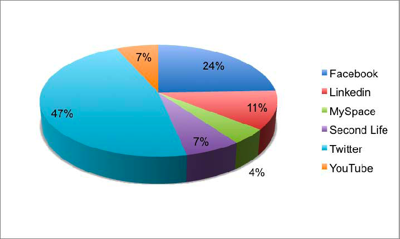
As I work with clients to build online communities, I find that external community sites like Twitter and Facebook are becoming an increasingly important part of the overall online community strategy. As a result, I was excited to read the results of Bill Johnston’s recent Online Community Research Network study on this topic. The study looked at how organizations are incorpating external communities and social media sites in their online strategies. Bill posted more information about the results in his post, but here are a few of the highlights.
Twitter and Facebook are the highest priority external community sites for most organizations followed by LinkedIn. This is consistent with what I have been hearing from clients. My clients also tend to ask about YouTube and occasionally MySpace.
Each organization’s business goals for using external community sites are slightly different, but some of the most important goals included:
Educate and inform
Peer-to-peer evangelism
Retain customers / loyalty
The most surprising part of this research is the number of people who don’t think they need a plan for these efforts. I disagree.
It’s important to approach your external community efforts (including social media) with clear goals and some thought (i.e. plans) for how you want to approach each site and how everything fits together. The plan should include objectives along with roles and responsibilities that clearly outline who will update each site, how often, and with what content. Without good planning, your corporate presence is likely to look either disorganized and scattered or abandoned and barren.
I think this helps highlight the difference between knowing how to use communities and social media for personal pursuits and knowing how to engage in them to meet the specific objectives of an organization. I don’t have a plan for how I use social media in my personal life, but I do work with clients to help them put together strategies, plans and content roadmaps for using external online community sites. If you don’t already have a plan for your external online community engagement, you should find someone (internal or external) who has experience building corporate online community strategies and plans to help you get organized. You don’t need to spend months on the plan, and it doesn’t need to be a 100 page document, but you should have some kind of written plan.
Does your organization have a plan for your external community efforts?
Open source, research, and other stuff I'm interested in posting.

![Hero image for Roundtable Discussion: [GROUP B] Strategic Approach to Improving your OSPO using CHAOSS. MENTOR: Dawn Foster (TODO Group Ambassador). October 6, 2026. 13:40 - 14:40. Deloitte Offices. OpenChain X OSPOlogy Prague 2026.](https://fastwonderblog.com/wp-content/uploads/2026/09/07-roundtable-chaoss.png)







 It can be all too easy for community managers to fall into the day to day routines of managing your community without spending time on planning and strategy to make sure that you are heading in the right direction. All of those daily responsibilities and urgent requests are usually a full time job, which leaves little to no time for reflecting on what works well (or doesn’t), planning improvements, thinking strategically about where the community should be heading and coming up with a plan for how to get there. Many communities tend to slow down during the holidays, so now might be a good time to start!