 Before I get into why I’ve decided to step down from the Legion of Tech Board, I want to provide a little bit of history and background. In 2006, I attended Foo Camp, the unconference event that was catalyst for the global BarCamp phenomenon, and I was blown away by the experience. The vibe of a conference organized by attendees was like nothing I had experienced before, and you get a group of very passionate and smart geeks – the type of people willing to give up a weekend to pursue various geeky endeavors. When I got back to Portland, I was craving more of that type of event. I started thinking about all of the smart and amazing people we have here, and I wished that we had unconferences and similar events. At some point, I realized that I should just start something and see what happened. I got in touch with Raven Zachary who was also interested in planning a BarCamp Portland, and I started a monthly BarCamp Meetup that helped us kick off the planning efforts for our first BarCamp Portland in 2007.
At that time, in 2006 and 2007, Portland had a vibrant technology community, but the community organized events were a bit siloed and the general purpose events were too corporate for my tastes. We had user groups for almost every programming language organized by communities of people or passionate individuals, and we had corporate events run by various organizations. BarCamp Portland and Ignite Portland filled this gap – larger events cutting across multiple technologies that were organized by the community for the community. However, we found that the logistics of organizing large events without some type of organization to handle things like paying vendors, getting event insurance, etc. was difficult. For BarCamp, we had sponsors pay vendors directly to purchase food, supplies and everything else we needed, but this was a logistical nightmare. We decided that a non profit organization would be a good way for us to have our events and be able to handle the event logistics more easily.
Viola! Legion of Tech was formed in December of 2007, and I am still very proud of the role that I’ve played in this organization over the past 3+ years. I’ve served as Chair, Secretary and board member of Legion of Tech, and I was one (of the many) driving forces behind the organization. Legion of Tech is my baby, but it’s time to push that baby out of the nest. 🙂
In the past 3 years, I feel like we’ve made great progress toward solving the problem that I wanted to solve – have more large, community organized events in Portland that cut across technologies and help to unify the Portland technology community. I actually think that maybe we’ve swung too far in the other direction with so many of these events. Attendees, sponsors and organizers are starting to get burned out with so many events, and I’m burned out from organizing events. As most of you know, organizing events is a lot of work, and running a non profit organization is also a significant amount of work. The work that I once found invigorating has become exhausting because I’m not as excited about organizing events as I once was. I’m not as passionate about organizing events, and at the same time, I think that Legion of Tech has to undergo some changes in order to continue to best serve the Portland technology community. There are other people currently sitting on the board (and I’m guessing others in the community) who are passionate about making whatever changes are needed and who are ready to step up with a new vision for Legion of Tech.
Don’t get me wrong, I still love Legion of Tech, and I am confident that it will continue to live on for many years and evolve along with the Portland Tech Community. I am just ready to hand the reins over to other people to drive it in a new direction.
What does this mean for me?
- I still plan to help organize and volunteer for events like Ignite Portland, but I will probably start to move into more of a supporting role rather than a leadership role for these events.
- It will free up my time to work on other projects. I have a few side projects that I would like to work on, and I plan to brush up on my very rusty coding skills and spend more time hacking on API data as part of my work on these other projects.
What does this mean for you?
- Do you want to see Legion of Tech do something a little different? Start thinking about what you would like to see change.
- My leaving frees up space on the board for more people who want to make a difference in the Portland technology community. You can read our blog post about the election process to learn more or run for the 2011 board.
I’ll be stepping down on December 31 when the new board members take office, so I’ll be involved in the elections for the 2011 board. Feel free to track me down at Beer and Blog if you have any questions about Legion of Tech or the election process.
 I like to occasionally launch random websites, so here’s my latest: Rednecks in the Wild. Rednecks in the Wild is a website where anyone can submit pictures of homo redneckus aka “rednecks” in their natural habitats.
Submit pictures!
 Subscribe to the RSS feed
 Subscribe by email
 Follow us on Twitter
 Share Facebook page
 Here are a few of my favorite pictures so far:
 It can be all too easy for community managers to fall into the day to day routines of managing your community without spending time on planning and strategy to make sure that you are heading in the right direction. All of those daily responsibilities and urgent requests are usually a full time job, which leaves little to no time for reflecting on what works well (or doesn’t), planning improvements, thinking strategically about where the community should be heading and coming up with a plan for how to get there. Many communities tend to slow down during the holidays, so now might be a good time to start!
 I don’t play werewolf just because I love it. I play it because it builds community.
 Wow.
Wow.
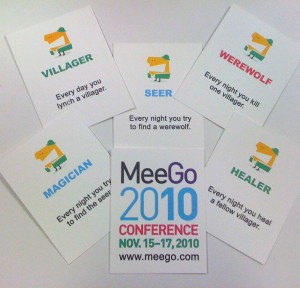 The best part of the conference from a community building perspective was the 24 hour hacker lounge where people gathered after the evening events ended to work on projects, hang out and play games. We used this space to play many, many games of