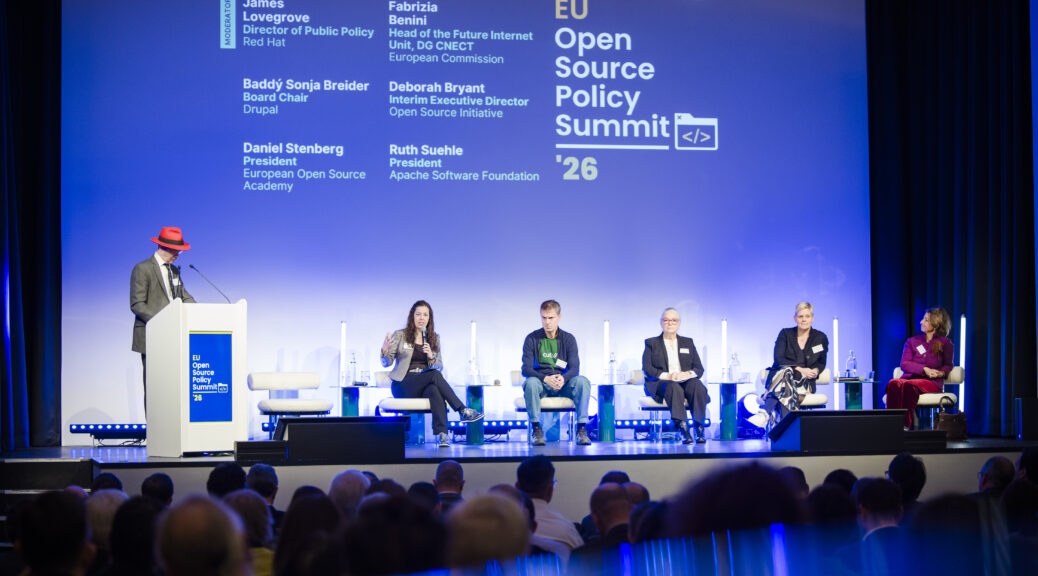
The tagline for Open Forum Europe’s (OFE) EU Open Source Policy Summit on January 30th in Brussels was “Digital Sovereignty Runs on Open Source,” which is in sharp contrast to last year’s tagline, “What can open source do for Europe?” At the 2025 summit, the conversations were about convincing those working in the public sector that open source was a good idea. Given the changes in the political landscape over the past year, many of those public sector folks seem to have shifted toward talking about what it will take to use open source as a key component in the EU’s digital sovereignty strategy. While we still have a lot of work to do, it feels like the conversations are moving in the right direction from why to use open source to how open source can increase digital sovereignty.
In my post last week about Funding Open Source Sustainability at CHAOSScon and FOSDEM, I talked about how open source sustainability was top of mind for me during these events considering the increase in maintainer burnout due to a lack of resources for open source projects. What struck me about the OFE event was how many people were talking about how we need to provide more resources for open source projects if the EU wants to rely on them to facilitate digital sovereignty.
In Dirk Schrödter’s keynote, he talked about how the EU doesn’t want to be locked into big US tech firms that deliver technology as black box, proprietary solutions. He mentioned that open source provides shared knowledge and skill development that leads to open innovation and lower barriers to entry, which is a key to economic prosperity. Dirk went on to say that sustaining open source software requires shifting spending to prioritize open source solutions, and public money should be spent on open source solutions. These ideas were common threads throughout the day that came up again and again in other panels and talks.
Here are a few other key points summarized from throughout the day:
- I heard several people say that we should “never waste a good crisis,” and the current political landscape is an opportunity to re-evaluate how the EU uses technology, but speeches aren’t enough. Many public procurement policies make it difficult to use open source, and that needs to change. Procurement policies need to focus on open source to facilitate standardization and interoperability.
- Digital sovereignty is about choice and the need to be able to switch between solutions to avoid lock in and create a transparent ecosystem to build solutions on top of open source. The EU should define concrete steps to replace proprietary solutions and transition to open source and use this as a window of opportunity to leverage what already exists, rather than reinventing.
- Open source is worldwide, so there is a need to fund the maintainers and people who are contributing the code wherever they are located. Open source has always been global and there is a hope that we can continue to collaborate together, rather than being isolationist.
- We need to all work together to strengthen and scale open source to improve sustainability, but financing and sustainability is a big challenge, and it requires investing in open source maintenance. Maintenance keeps innovation alive; it’s like plumbing, roadworks, and other infrastructure that needs to be steadily supported over time. There isn’t enough money in public budgets to make a big enough difference, so there is also a need for industry support.
- There is a need for action now beyond the people attending the summit. The message of using open source to facilitate digital sovereignty needs to go well beyond the tech crowd to local officials across the EU public sector.
- OSPOs can help put digital sovereignty and open source in context and facilitate collaboration and discussions between internal stakeholders, but also between industry and the public sector. OSPOs can help organizations take a more strategic approach by contributing to and funding open source, encouraging employees to take on leadership / maintainer positions, and increasing advocacy for open source solutions.
- There were also two announcements at the summit. First, the Open Knowledge Foundation, Open Source Initiative, and OpenForum Europe came together to launch Open Technology Research to create a sustainable global platform for research, knowledge exchange, and policy engagement around open technologies. Second, the UN published the report from the 2025 UN Open Source Week and announced that the 2026 UN Open Source Week will be held in New York from June 22 – 26.
As someone who has been working in open source for a very long time, I’ll admit to being a bit bored at last year’s event with so many discussions about why we should use open source, since I’ve been having those discussions for 25+ years. This is why I was so pleasantly surprised to see how far the conversations have evolved in just one year. The shift toward talking about what needs to happen to make using and relying on open source in the public sector along with conversations about sustainability felt like progress. There is still a very long way to go. So many open source projects are struggling with finding people, funding, and other resources to sustain themselves over time, so we need to continue to move from conversations to action so that the open source projects we all rely on will continue to thrive as even more people rely on them to facilitate digital sovereignty.
Related Resources:
- EU Open Source Policy Summit talk recordings
- The Impact of Funding for Sustainable Open Source Projects
- Sustainable Open Source Leadership
- From Data to Action: Building Healthy and Sustainable Open Source Projects
- Contributor Sustainability Impacts Risk and Adoption of OSS Projects
- What can your OSPO do about power dynamics, rug pulls, and other corporate impacts on OSS sustainability?
- CHAOSScast Episodes on Demonstrating Value and Funding Impact
- FOSDEM Funding Devroom – videos will be available for all talks
- Funding Open Source Sustainability at CHAOSScon and FOSDEM
If you want help with your open source strategy, I’m available for consulting engagements.
Photo from the EU Open Source Policy Summit’s photo gallery.